


Gifting has never been easier
Perfect if you're short on time or are unable to deliver your gift yourself. Enter your message and select when to send it.


A guide to holy basil and a look at our Golden Sun tea, hand-blended in Maryland from estate-grown botanicals

Before it became a fixture in Western apothecaries, tulsi grew in household courtyards across India. Families kept a plant near the front door. It was watered each morning, sometimes with a small offering. The leaves were picked for cooking, for tea, and for the home altar. None of this was incidental. Tulsi has been treated as a sacred plant in Hindu households for over three thousand years, and its leaves have been steeped into a warm, peppery tea for nearly as long.
Outside of that tradition, most people first encounter tulsi as a loose tea in a shop or on a friend’s kitchen counter. The name on the tin might read tulsi, or it might read holy basil. The two refer to the same plant. This guide covers what tulsi actually is, how it tastes, what the research says about its effects on the body, how to brew it well, and how we approach it in our own house blend, Golden Sun.
What is Tulsi Tea?
Tulsi tea is an herbal infusion made from the leaves of the tulsi plant, known botanically as Ocimum sanctum (sometimes classified as Ocimum tenuiflorum). The plant is a relative of the culinary basil most Western kitchens keep on hand, though the two taste nothing alike. Tulsi is warmer, more peppery, and carries a faintly clove-like note that comes from eugenol, the same aromatic compound that gives cloves their heat.
Because tulsi is an herbal infusion rather than a true tea, it contains no caffeine. It is not made from Camellia sinensis, the plant responsible for green, black, and oolong teas. Pour a cup at night, and it will not keep you up.
Several types of tulsi are used for tea, each with its own character:
Many commercial tulsi blends combine all three.


Tulsi is native to the Indian subcontinent and still grows across India, Nepal, Sri Lanka, and parts of Southeast Asia. In Hindu tradition, it is associated with the goddess Lakshmi and is considered a manifestation of her presence in the home. The plant is grown in clay pots on family thresholds, watered daily, and leaves are harvested by hand for the kitchen and for tea.
In Ayurveda, the traditional medicine system of India, tulsi is classified as a rasayana, a plant that supports longevity and overall vitality. Ayurvedic texts describe it in use as far back as the Charaka Samhita, a foundational Ayurvedic manuscript dated to roughly 300 BCE. The plant’s reputation there rests on its ability to help the body adjust to physical and mental strain.
Tulsi has since spread well beyond India. Several varieties, including Kapoor, grow successfully on small farms in North America, where the climate during the warmer months is close enough to its native range to produce strong, aromatic leaves.

Most of what people associate with tulsi comes from its long use in Ayurveda, where the plant has been treated as a tonic for daily life rather than a remedy for any single condition. The traditional reasons for brewing it tend to fall into a few familiar categories.
None of this is a medical claim. Traditional uses are exactly that: ways a plant has been turned to over generations, valued for an effect people have noticed and passed down. If you are taking medication or are pregnant, it is worth speaking with a healthcare provider before adding any new herbal tea to a daily routine.


Warm and peppery, with a faintly sweet finish. The clove note is the most distinctive element: a slight tingle at the back of the tongue that comes from eugenol in the leaf. Rama tulsi tastes the closest to what Western palates might expect from a garden herb. It is soft and green, almost minty. Krishna is more assertive and carries a subtle heat. Vana brings lemon and a brighter top note.
Tulsi takes well to blending. Fresh ginger, cardamom pods, black pepper, lemon peel, or a single dried rose petal will all find their way into the cup without muddying the tulsi itself. Honey works better than sugar if you want sweetness. Milk works too, particularly with Krishna tulsi. The result tastes a little like a light chai.
Golden Sun is our own herbal blend, built around Kapoor tulsi and grown, dried, and hand-blended on a certified organic family farm in White Hall, Maryland. The whole batch comes from one place, which is unusual for tea and is a large part of why we make it the way we do.
There are four herbs in the tin. Lemon verbena leads with a clean, bold citrus that opens the cup. Kapoor tulsi sits underneath it, adding the warm peppery depth tulsi is known for. Calendula and lavender finish the blend with soft floral notes that round out the citrus and keep the tulsi from feeling sharp. The result is naturally sweet, lightly floral, and easy to drink in the middle of the afternoon when something warm without caffeine is what the day needs.
Every batch is prepared by hand and packed into a reusable metal tin, which keeps the leaves dry and protects the aromatics. The tin is also better than a paper bag for refills, which is its own small argument for buying loose leaf.


The brewing itself is forgiving. Tulsi does not contain the tannins that make true tea bitter when over-steeped, so there is little risk of getting it wrong.
For loose-leaf tulsi:
For a stronger infusion, increase the tea by half a teaspoon rather than extending the steep. A small clay or stoneware pot holds the heat better than a glass mug, which matters more with tulsi than with black tea because the aromatics are volatile and dissipate quickly.
To brew a cold infusion, use two teaspoons of leaf per eight ounces, cover with room-temperature water, and refrigerate overnight. The result is cleaner and more floral than hot-brewed tulsi and pairs well with a squeeze of lime.
Fresh tulsi leaves can also be used. Three or four whole leaves, bruised lightly against the side of a cup and covered with hot water, make a simple single-serving infusion. Fresh leaves produce a lighter, grassier cup than dried.

Tulsi grows well in a sunny window or a warm outdoor pot. The seeds germinate easily, and the plant thrives in temperatures above 50°F, which means in most of the United States, it is treated as a summer annual or kept indoors in winter. Pinch the flowering tips regularly to keep the plant producing leaves. A mature plant will yield enough fresh leaves for regular cups of tea without being stripped bare.
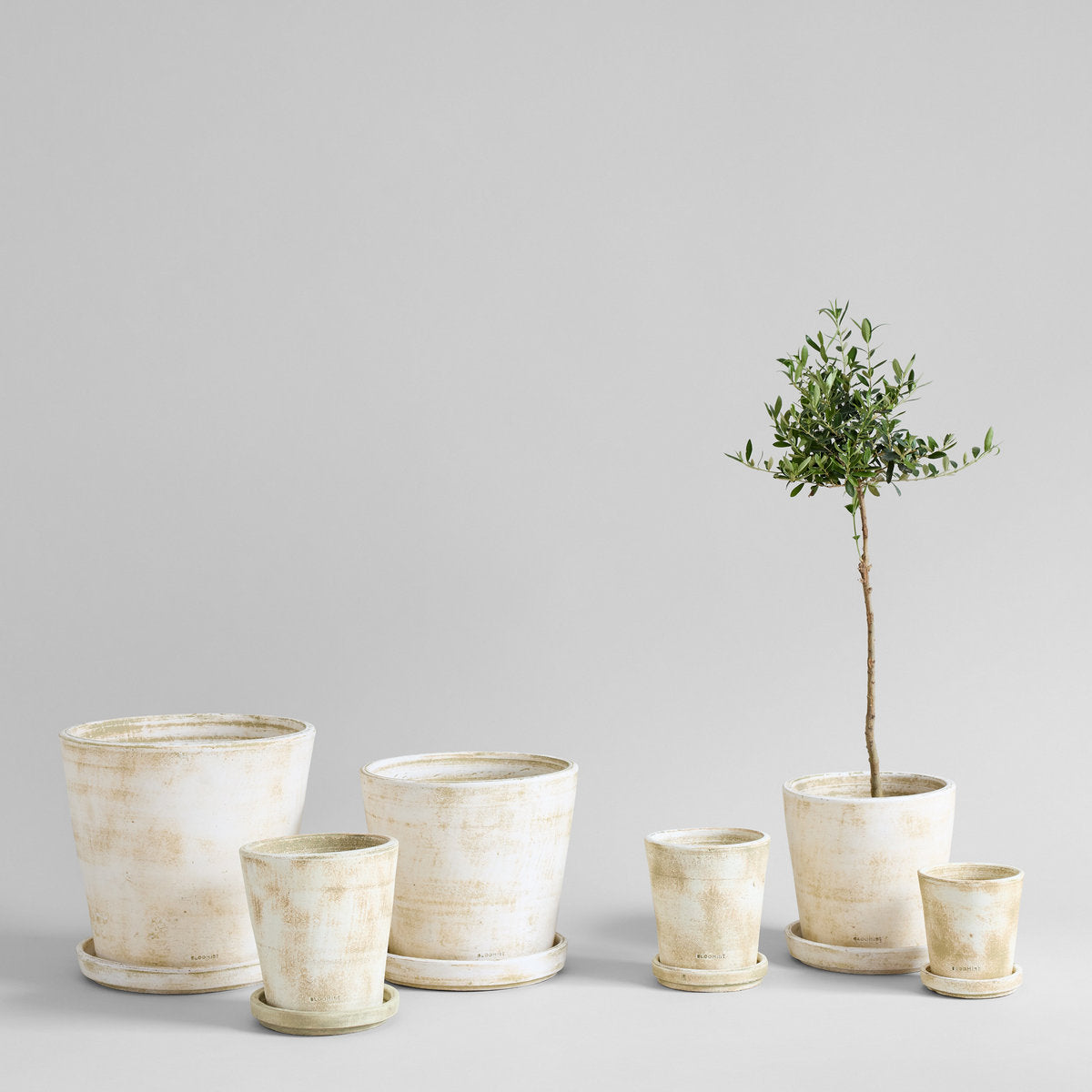
A clay pot is the traditional vessel and also a practical one: tulsi does not like wet feet, and terra cotta breathes in a way that helps the soil dry between waterings.
Terra cotta breathes between waterings, which is why tulsi and most herbs prefer it to glazed pots.




What has kept tulsi close to daily life for three thousand years is simple: it tastes genuinely good, and people have long felt better for drinking it. That's why the plant has been kept by front doors for generations.
If you are new to it, start with a single-origin Rama or a house blend, brew it a little stronger than you think you need, and drink it in the afternoon when the day is turning. The flavor opens up on the second cup.

Yes. Tulsi and holy basil are two names for the same plant, Ocimum sanctum. Tulsi is the Sanskrit name used in India, where the plant has been part of Hindu tradition for over three thousand years. Holy basil is the common English translation. The two terms appear interchangeably on tea labels.
No. Tulsi tea is an herbal infusion made from the leaves of the holy basil plant, not from Camellia sinensis (the plant that produces green, black, oolong, and white tea). Because it is not a true tea, it contains no caffeine and can be consumed in the evening without affecting sleep.
Warm and peppery, with a faintly sweet finish. The most distinctive note is a clove-like tingle at the back of the tongue, which comes from eugenol, the same aromatic compound that gives cloves their character. Tulsi blends well with citrus, ginger, and floral herbs, which is why it often appears in herbal blends.
Yes. Tulsi tea has been consumed daily in India for thousands of years and is part of normal everyday use in Ayurvedic tradition. Like any herbal tea, individual tolerance varies. People taking medication or who are pregnant may want to consult a healthcare provider before adding any new herbal tea to a daily routine.
No. Green tea is made from Camellia sinensis and contains caffeine and catechins. Tulsi tea is an herbal infusion made from the leaves of holy basil (Ocimum sanctum), a different plant entirely. The flavor is also different: green tea is bright and vegetal, while tulsi is warm, peppery, and more savory.
Loose-leaf tulsi tea stays fresh for about 18 to 24 months when stored properly. Keep it in an airtight container away from light, heat, and moisture. A reusable metal tin works well because it blocks light fully and slows the aromatics from dissipating. Once opened, plan to use the leaf within six to twelve months while the flavor is at its peak.
The tulsi in Golden Sun is Kapoor tulsi (Ocimum africanum), grown on a certified organic family farm in White Hall, Maryland. The same farm also grows the lemon verbena, calendula, and lavender that complete the blend. Every batch is dried and hand-blended on-site in small quantities.


Your Shopping Cart is Empty
Browse our latest collection or check your saved favorites to add more items to your cart.




Manage your profile, track your orders, and enjoy a seamless shopping journey with us.