



Gifting has never been easier
Perfect if you're short on time or are unable to deliver your gift yourself. Enter your message and select when to send it.


An ancient Japanese technique for displaying plants without pots

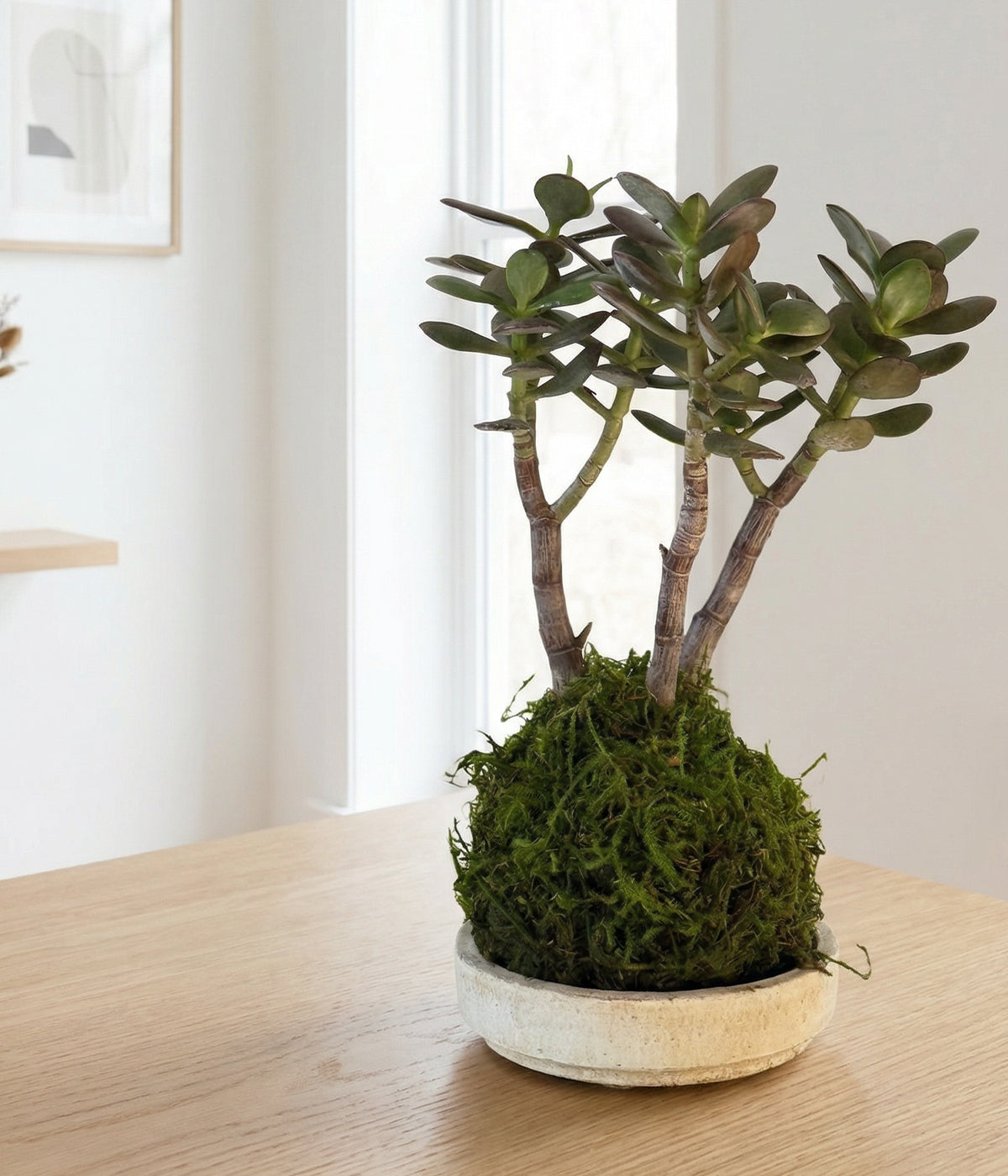
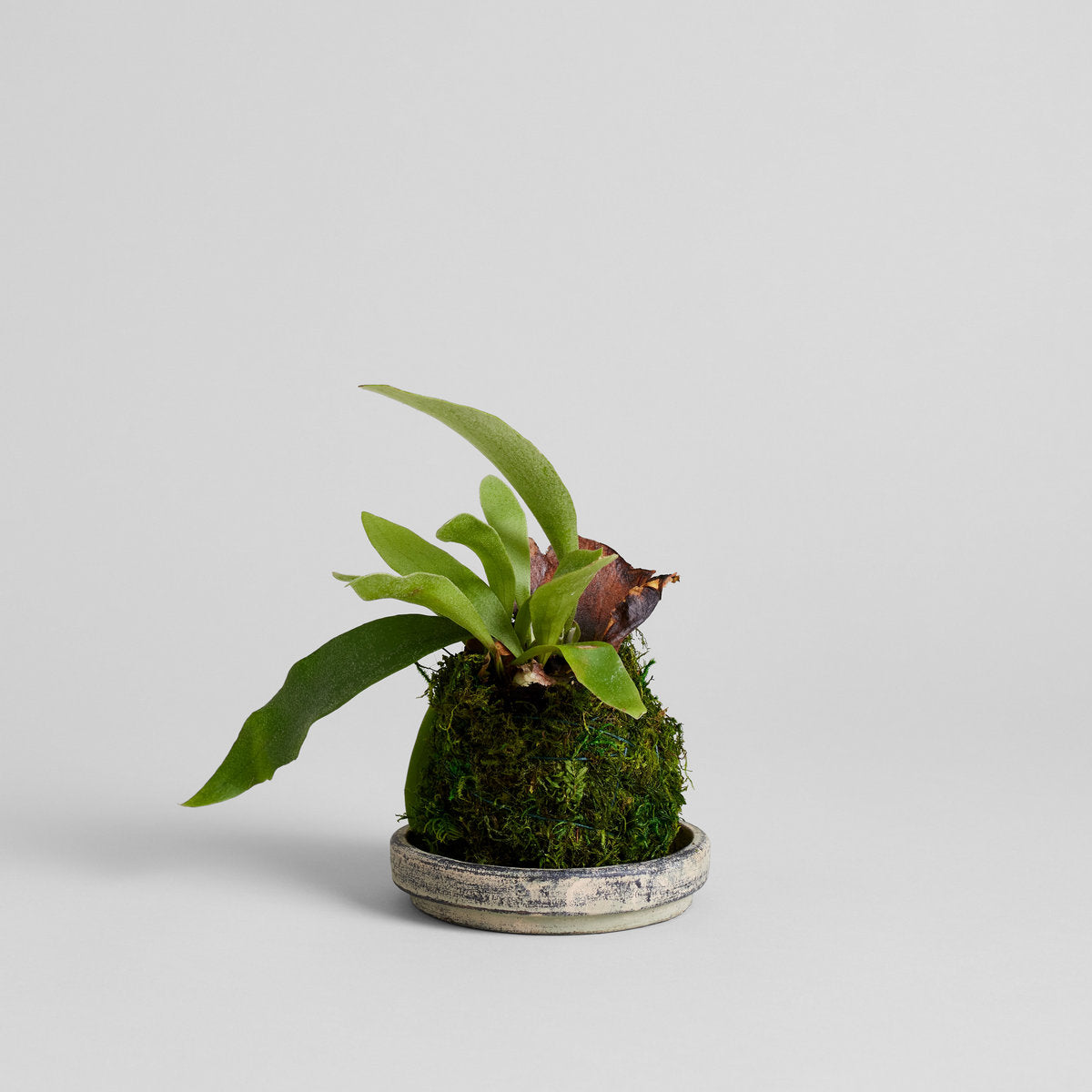
Kokedama , the Japanese art of growing plants in moss-covered balls of soil, dates back to the Edo period around 1600 AD. The name translates simply: "koke" means moss, "dama" means ball. What began as a variation of bonsai has become one of the more distinctive ways to bring greenery into a home.
Without a pot, the plant becomes a sculpture. Suspended by a string or resting on a ceramic dish, a kokedama draws attention to form in a way traditional containers rarely achieve. The format works equally well hung from a ceiling, clustered at varying heights, or displayed individually on a shelf. This versatility makes kokedama practical for spaces where traditional planters might not fit.
Caring for kokedama differs from standard houseplant care, but not dramatically. Understanding the basics will keep your moss ball thriving for years.


With proper care, a kokedama can last two to three years before the plant outgrows its moss ball or the structure needs refreshing. Some last considerably longer, five years or more, with the right plant and consistent maintenance.
The lifespan depends on several factors:
Plant growth rate matters most. Slow-growing plants like ferns, pothos, and smaller bromeliads tend to stay happy in their moss balls longer than fast growers. A pothos kokedama might last three to four years with occasional pruning, while a fast-growing asparagus fern may need remaking after 12 to 18 months.
Epiphytic plants often thrive in kokedama for years because the conditions mirror their native habitat. Bromeliads, staghorn ferns, and rabbit's foot ferns fall into this category. They're naturally adapted to growing on surfaces rather than in soil.
Moss and twine conditions also play a role. The outer structure degrades over time, especially with regular soaking. Natural twine may begin to fray after 12 to 18 months. The moss itself can thin or turn brown. Even if the plant remains healthy, the kokedama may need re-wrapping.
Signs it's time to remake: Roots pushing visibly through the moss surface. The plant looks crowded, top-heavy, or stunted. Twine breaking or moss falling away in patches. The ball no longer holds its shape after watering.
At that point, you can either remake the kokedama with a larger ball (increasing the diameter by about 2 inches), divide the plant, or transfer it to a terracotta planter and start fresh with a new specimen.


STEP-BY-STEP WATERING INSTRUCTIONS
Step 1: Prepare your soaking container.
Fill a bowl, bucket, or sink with room-temperature water, approximately 65-75°F (18-24°C). The container should be deep enough to fully submerge the moss ball. Cold water can shock tropical plants; hot water can damage roots.
Step 2: Submerge the moss ball.
Place your kokedama in the water, plant side up. The ball will likely float at first. This is normal, especially if it's very dry. Gently press it down until it stays submerged and begins releasing air bubbles.
Step 3: Soak for 10 to 20 minutes.
Allow the moss ball to absorb water until it feels heavy and saturated. A small kokedama (3-4 inches in diameter) typically needs 10 minutes. A larger one (6+ inches) may need 15 to 20 minutes. You'll know it's ready when air bubbles stop rising, and the ball feels noticeably heavier, roughly double its dry weight.
Step 4: Remove and squeeze.
Lift the kokedama from the water and hold it over the container or sink. Gently squeeze the moss ball with both hands to release excess water. Don't crush it. Apply steady, moderate pressure. The goal is to remove dripping water while leaving the ball moist throughout.
Step 5: Drain before displaying.
Place the kokedama in a colander or on a wire rack over the sink for 10 to 15 minutes. It should stop dripping completely before you return it to its display spot. Placing a wet kokedama on furniture, fabric, or unsealed wood will cause water damage and can encourage mold.

Most kokedama need watering every 7 to 14 days, though this varies by plant, environment, and season. Ferns and calatheas prefer consistently moist conditions and need water every 5 to 7 days; pothos and philodendrons tolerate more drying and can go 10 to 14 days; succulents need even less, around every 2 to 3 weeks. Plants in brighter, warmer, or drier spots will need water more often, and more frequently through spring and summer when growth is active.
The weight test is the most reliable indicator. Pick up your kokedama and note how it feels fully saturated versus dry. After a few weeks, you'll develop a feel for when yours needs soaking — typically when it feels about half as heavy as it did right after watering, or when the moss feels dry and papery to the touch.

Kokedama can be sensitive to minerals and chemicals in tap water, which accumulate over time in the moss ball.
Potential issues with tap water: Fluoride and chlorine can cause brown leaf tips, especially on spider plants, dracaenas, and calatheas. Hard water (high mineral content) leaves white crusty deposits on the moss and can turn it brown. Salt buildup from softened water can damage roots.
Better alternatives: Filtered water, collected rainwater, or distilled water all work well. If you're using tap water, letting it sit uncovered for 24 hours allows the chlorine to dissipate — though it won't remove fluoride or mineral content.
If you notice browning moss, white deposits, or persistent brown leaf tips despite good care, switch to filtered or rainwater.
The light needs of your kokedama depend entirely on the plant inside it. There's no one-size-fits-all answer, but the most common kokedama plants share similar preferences.

Bright, indirect light (within 3-5 feet of a window): Pothos, philodendrons, spider plants, ferns (Boston, bird's nest, rabbit's foot), hoyas, and most tropical foliage plants.
Medium light (5-8 feet from a window, or north-facing windows): Peace lilies, calatheas, marantas, dracaenas, and some ferns like maidenhair.
Lower light tolerant (but growth will slow): Pothos (very adaptable), peace lilies, and snake plants (less common in kokedama but possible).

Too much light: Leaves develop brown, scorched patches. The foliage looks bleached or faded. Moss dries out within 2-3 days of watering. Moss turns brown and crispy despite adequate watering.
Too little light: New growth appears leggy or stretched. Variegated leaves lose their patterns and turn solid green. The plant produces few or no new leaves. Flowering plants fail to bloom.

A few positioning notes worth keeping in mind: avoid direct afternoon sun, which can scorch leaves and dry moss quickly. Morning light from an east-facing window is usually ideal. Rotate your kokedama a quarter turn each week for even growth, and in winter, move them closer to windows as light levels drop.
The moss covering of a kokedama needs humidity to stay green and supple. Most kokedama plants thrive between 40–60% relative humidity. The moss prefers the higher end of this range.
In dry environments, below 40% humidity, the moss turns brown or crispy even with proper watering, and the ball dries out faster and needs soaking more often. A few ways to raise humidity around your kokedama:
Most kokedama plants prefer temperatures between 60–80°F, standard indoor conditions. Keep them away from heating vents, radiators, cold drafts, and anywhere the temperature swings significantly — tropical plants in particular suffer from fluctuation more than from a sustained temperature at either end of the range.

Most kokedama plants prefer temperatures between 60-80°F (15-27°C), typical indoor conditions.
Avoid: Temperatures below 55°F (13°C), which can stress tropical plants. Temperatures above 85°F (29°C), which accelerate drying and can cause heat stress. Placement near heating vents, radiators, or fireplaces. Cold drafts from windows, exterior doors, or air conditioning units. Spots where the temperature fluctuates dramatically.
The best kokedama plants share a few characteristics: they stay relatively small, tolerate occasional drying between waterings, and don't mind confined root space. Epiphytic plants adapt especially well because kokedama conditions resemble their native habitat.

Light: Low to bright indirect.
Water: Every 10-14 days. Extremely forgiving, tolerates drought, easy to prune to maintain size. Trailing foliage looks striking from a suspended kokedama.
Varieties to try: Golden pothos, marble queen, neon pothos.

Light: Medium to bright indirect.
Water: Every 7-14 days. Similar to pothos in resilience and adaptability. Easy to keep compact with pruning.
Best varieties for kokedama: Heartleaf philodendron (small leaves, trailing habit) and philodendron Brasil.

Light: Low to medium indirect.
Water: Every 7-10 days. Tolerates lower light, communicates thirst clearly (leaves droop dramatically when dry, perk up after watering), produces white blooms in good conditions.

Light: Bright indirect.
Water: Every 7-14 days. Hardy, adaptable, produces trailing plantlets that add visual interest. For detailed care information, see our spider plant care guide.

Light: Medium to bright indirect (no direct sun).
Water: Every 5-7 days (keep consistently moist). Lush, textural foliage. Many species are epiphytic and adapt well to moss ball culture.
Best varieties: Boston fern, bird's nest fern, rabbit's foot fern, blue star fern. Note that ferns need higher humidity than some other options. Mist regularly or place in a humid room.

Light: Medium indirect (avoid direct sun).
Water: Every 5-7 days. Stunning patterned foliage, compact growth habit. More demanding than pothos. Sensitive to tap water minerals, need consistent humidity (50%+), and don't like to dry out completely.

The traditional kokedama soil mix retains more moisture than succulents prefer, increasing root rot risk. They also need more direct light than most indoor spots provide. Possible with a modified, fast-draining soil mix, but not ideal for beginners.

These will quickly outgrow their moss ball, often within 6-12 months, requiring frequent remaking.
OVERWATERING
Though less common than underwatering, overwatering causes root rot, turns moss slimy, and encourages mold growth.
Signs of overwatering:Yellowing leaves, especially lower leaves. Mushy, blackened stems at the base. Soil that stays soggy for more than a week after soaking. Mold or fungus growing on the moss surface. Foul smell from the moss ball.
How to fix it: Extend the time between soakings and wait until the ball feels noticeably light. Ensure you're squeezing out excess water thoroughly after each soak. Allow longer drainage time (15-20 minutes) before redisplaying. If mold appears, wipe it away with a cloth dampened with diluted dish soap (1 part soap to 10 parts water) and move to a spot with better air circulation. For severe cases, you may need to re-wrap the kokedama with fresh, dry moss.
UNDERWATERING
More frequently, kokedama suffer from too little water. The exposed moss ball dries out faster than soil in a pot, especially in dry or warm environments.
Signs of underwatering: Brown, crispy leaf edges or tips. Leaves drooping, wilting, or folding inward. Moss feels papery, crispy, or crunchy. The ball feels featherlight when lifted. Leaves curling inward (especially on calatheas).
How to fix it: Water more frequently and adjust your schedule. Soak longer (up to 25-30 minutes for very dry balls). Mist the moss between soakings. Move to a less sunny or drafty location. Consider placing it on a humidity tray.
PLACING IN DIRECT SUNLIGHT
Direct sun dries the moss rapidly and can scorch leaves. Even sun-loving plants struggle when their roots are exposed in a moss ball rather than insulated in a pot of soil.
Signs of too much sun: Moss turns brown and crispy within 2-3 days of watering. Leaves develop bleached or scorched patches. Rapid, excessive drying.
How to fix it: Move to a spot with bright, indirect light. Morning sun is usually fine. The afternoon sun is usually too intense.

USING HARD OR TREATED TAP WATER
Mineral buildup from hard tap water turns moss brown and can damage plants over time.
Signs of water quality issues: White crusty deposits on the moss surface. Moss turning brown despite proper watering. Persistent brown leaf tips (especially on spider plants, dracaenas, calatheas).
How to fix it: Switch to filtered water, rainwater, or distilled water. For existing mineral buildup, you can soak the moss ball in distilled water for 30 minutes to help flush out some deposits.
NEGLECTING THE MOSS
Even with perfect plant care, the moss covering needs occasional attention.
Common moss issues: Brown patches from drying, hard water, or age. Thinning moss exposing soil beneath. Twine fraying or breaking.
How to fix it: For brown moss, increase humidity, mist regularly, and switch to filtered water. For structural issues, re-wrap with fresh sheet moss and new twine every 1-2 years. Trim any dead or yellowing moss with scissors to keep the ball looking tidy.
SKIPPING DRAINAGE TIME
Returning a dripping kokedama to a wooden shelf, fabric, or unsealed surface causes water damage and can lead to mold.
The fix: Always let the ball drip dry for 10-15 minutes in a colander or over the sink before redisplaying. If you display on a surface rather than hanging, use a waterproof dish or saucer beneath.

Kokedama benefit from fertilizing during the growing season, but require less than potted plants because you typically want to keep growth moderate.
Spring and summer: Feed once a month during active growth.
Fall and winter: Pause fertilizing entirely. Most plants slow or stop growing.
Method 1: Add to soaking water. Mix a balanced liquid fertilizer (such as 10-10-10 or 20-20-20) into your soaking water at quarter to half the recommended strength. Soak as usual. This is the easiest method.
Method 2: Foliar feeding. Dilute liquid fertilizer to quarter strength and mist the leaves. This works for plants that absorb nutrients through their foliage, like bromeliads and ferns.

Over time, the moss and twine of a kokedama break down and need refreshing. This maintenance extends the life of your kokedama significantly.
Materials needed: Fresh sheet moss (preserved or live), natural twine, waxed string, or fishing line, bowl of water, and scissors.
Step 1: If using preserved sheet moss, soak it in water for 5-10 minutes until pliable. Squeeze out excess water.
Step 2: Carefully remove the old, degraded moss and twine from your kokedama, keeping the soil ball and plant intact.
Step 3: Lay the fresh moss flat, green side down, in a square or rectangular shape large enough to wrap around the ball.
Step 4: Place the kokedama in the center of the moss and wrap the moss around it, trimming excess as needed.
Step 5: Starting at the top, tie a loop of twine around the ball and secure it with a double knot. Wrap twine around the ball in various directions to secure the moss, keeping tension firm but not crushing the ball.
Step 6: Tie off the twine when the moss is fully secured. Trim any stray moss or excess twine.
Step 7: Soak the re-mossed kokedama for 10-15 minutes, squeeze out excess water, and allow it to drain before displaying.
Kokedamas look striking when displayed two ways: suspended as a "string garden" or resting on a surface.
HANGING KOKEDAMA
Suspended kokedama create a floating garden effect and work especially well with trailing plants like pothos, spider plants, and string of pearls.
How to hang:
Tips: Position away from doorways and high-traffic areas. Ensure the hook can support the weight of a fully saturated kokedama, which can be 2–3 times the dry weight. Hang where you can easily access it for watering. Rotate occasionally for even growth.
TABLETOP DISPLAY
Kokedama displayed on surfaces work well as centerpieces, shelf accents, or desk companions.
Display options: Shallow ceramic dish or plate. Wooden tray (lined or sealed to protect from moisture). Stone or slate coaster. Woven basket (with a waterproof liner). The dish catches any residual moisture and protects surfaces. Choose something that complements the moss ball's organic form. Natural materials like ceramic, stone, or wood work well.
Each kokedama in our collection comes with a tray for display, available in grey or white patina finishes. They also pair well with our wrought iron planter stands and granite stands.


Kokedama is a Japanese art form dating to the 1600s. The name means "moss ball" — plants are grown in a ball of soil wrapped in moss and bound with twine, then displayed without a pot. They can be suspended as a hanging garden or set on a dish.
Ko-keh-dah-mah. Four syllables, with equal emphasis on each. The word comes from Japanese: "koke" (moss) and "dama" (ball).
Yes, but less than potted plants. During spring and summer, feed once a month by adding a balanced liquid fertilizer to your soaking water at quarter strength. Skip fertilizing in fall and winter when growth slows.
It depends on the plant. Trailing plants like pothos benefit from occasional pruning to maintain shape and encourage fuller growth. Remove any yellowing or dead leaves as they appear. Pruning also helps prevent the plant from outgrowing its moss ball too quickly.
Yes. You'll need a plant, potting soil mixed with clay or peat, sheet moss, and twine. Form the soil into a ball around the plant's roots, wrap with damp moss, and secure with twine. It's a satisfying project, and we offer a DIY kokedama kit with everything you need to get started.
Most kokedama need watering every 7–14 days. The best indicator is weight. Pick up your kokedama and note how heavy it feels when saturated versus dry. Water when the ball feels about half as heavy as it did after its last soak, or when the moss feels dry and papery to the touch.
You can, but filtered or rainwater is better for long-term health. Minerals in hard tap water accumulate in the moss ball over time, leaving white deposits and potentially causing brown leaf tips on sensitive plants like calatheas and spider plants.
Brown moss usually indicates one of three issues: the environment is too dry (below 40% humidity), you're using hard tap water that's depositing minerals, or the moss is simply aging and needs refreshing. Try misting the moss between waterings, switching to filtered or rainwater, and re-mossing every 1–2 years.
Your Shopping Cart is Empty
Browse our latest collection or check your saved favorites to add more items to your cart.


Manage your profile, track your orders, and enjoy a seamless shopping journey with us.