Gifting has never been easier
Perfect if you're short on time or are unable to deliver your gift yourself. Enter your message and select when to send it.


Discover which plants thrive in these clay vessels and how to create lasting partnerships between plant and pot

For centuries, terracotta has shaped gardens from sun-warmed Mediterranean terraces to modern city balconies. These clay vessels do more than hold soil—they breathe with your plants, creating conditions that foster deep roots and vibrant growth.
Traditional terracotta vessels offer something plastic containers cannot: a living relationship with the plants they hold. Their porous walls draw away excess moisture while allowing roots to access the oxygen they need. This natural balance transforms the way plants grow, creating healthier and more resilient gardens.
The secret lies in terracotta's porosity. Unlike sealed containers that trap moisture, clay vessels regulate water naturally—excess moisture evaporates through the pot walls, preventing the waterlogged conditions that lead to root rot. This same porosity allows oxygen to reach plant roots, essential for the cellular respiration that drives healthy growth.
Terracotta also provides thermal regulation. The clay's mass helps buffer temperature fluctuations, protecting roots from sudden heat or cold. When the seasons change, your plants enjoy more stable growing conditions than they would in thin plastic containers.
As terracotta ages, it develops a soft patina—mineral traces that tell the story of countless waterings and seasons. This weathering isn't wear; it's evidence of a pot that has truly lived.
For plants that evolved in rocky, well-draining soils, terracotta pots offer ideal growing conditions. When you match plants to clay's natural properties, both flourish.


These aromatic herbs evolved on Mediterranean hillsides where water drains quickly and roots must search deep for moisture. Terracotta pots recreate ancestral conditions to promote healthy and long-lasting growth.
Growing Tips: Plant in a well-draining potting mix; combine standard potting soil with coarse sand or perlite in a 2:1 ratio. Place in full sun (6+ hours daily) and water when the top inch of soil feels dry.
Expert Tip: The slight stress from terracotta's drying cycles actually intensifies essential oil production in these herbs, creating more aromatic leaves. Rosemary particularly benefits from the thermal mass clay provides, helping it survive temperature fluctuations that would stress plants in plastic containers.
Few plants showcase terracotta's benefits better than lavender. This Mediterranean perennial demands excellent drainage and develops its most potent fragrance when grown under slight moisture stress—exactly what terracotta clay vessels provide.
Variety Selection: English lavender (Lavandula angustifolia) offers the most reliable container performance, with varieties such as 'Hidcote' and 'Munstead' remaining compact in size, thanks to controlled root growth that suits containers well. Avoid Spanish or French lavenders in smaller pots—they grow larger and need more space.
Growing Technique: Plant in a mix that drains aggressively. Use equal parts quality potting soil, coarse sand, and perlite. Top the pot with small stones or gravel to improve drainage further and prevent crown rot.

Water-storing succulents and breathable terracotta create an ideal partnership. These plants need soil that dries completely between waterings.
For New Gardeners: Use pre-made cactus and succulent potting mix for foolproof results. Water thoroughly but only when the soil is completely dry, typically every 7-10 days in warm weather, less in winter.
Professional Techniques: Echeveria rosettes show deeper colors when grown in terracotta, their leaves taking on burgundy edges and silvery highlights as the clay's drying action creates beneficial stress. Group different Echeveria varieties in matching pots for dramatic displays that showcase their diverse forms and colors.
Mature jade plants (Crassula ovata) develop impressive trunk-like stems that complement terracotta's substantial presence. These long-lived succulents can occupy the same clay pot for years, both aging gracefully together.
String of pearls (Senecio rowleyanus) and other trailing succulents create dramatic cascades over weathered clay edges, their unusual forms highlighted against the pot's earthy texture.

True geraniums and hardy geraniums both thrive in terracotta's well-draining environment. These cottage garden favorites develop stronger root systems and more abundant blooms when grown in clay, which prevents the wet conditions that cause stem rot.
Seasonal Care: In regions with frost, treat geraniums as annuals or bring pots indoors before the first freeze. For year-round growing zones, trim back by one-third in late winter to encourage fresh growth.
Companion Planting: Pair upright geraniums with trailing herbs like thyme or oregano in large terracotta planters for functional beauty that serves both kitchen and garden.
Annual flowers like marigolds and nasturtiums perform exceptionally well in terracotta during their single-season lifespan. Marigolds particularly appreciate clay's warming properties, as the thermal mass promotes steady growth and continuous blooming.
Garden Integration: Nasturtiums offer edible flowers and leaves with a peppery flavor, making them perfect for kitchen gardens. Their trailing habits look beautiful spilling over terracotta edges while providing cut-and-come-again harvests.

For indoor growing, snake plants (Sansevieria trifasciata) represent excellent choices for terracotta containers. Their upright, architectural forms create striking displays in clay vessels, while their minimal water requirements align perfectly with terracotta's drying properties.
Indoor Success Tips: Place near bright, indirect light and water only when the soil is completely dry—often just once monthly in winter. The weight of terracotta prevents these top-heavy plants from tipping as they mature.
ZZ plants (Zamioculcas zamiifolia) also thrive in terracotta indoors, tolerating the periods of dryness that clay creates. Their glossy leaves and sculptural growth habit complement terracotta's organic aesthetic beautifully.
Larger indoor specimens like fiddle leaf figs and rubber trees benefit from terracotta's root aeration properties. The clay's porosity prevents anaerobic conditions that lead to root rot—a common problem with overwatered houseplants in plastic containers.
Size Considerations: Choose substantial terracotta pots (14+ inches) that provide adequate weight to prevent top-heavy plants from tipping. The thermal mass also helps buffer indoor temperature fluctuations around heating vents or windows.

Cherry tomato varieties excel in large terracotta pots, developing concentrated flavors when grown in clay's well-draining environment. The thermal mass helps maintain consistent soil temperatures that promote steady fruit development.
Container Specifications: Choose pots at least 18 inches wide and deep for indeterminate varieties, 12-14 inches for determinate types. Use quality potting mix enhanced with compost—never garden soil, which compacts in containers.
Watering Strategy: Vegetables need consistent moisture despite terracotta's drying nature. Check the soil daily in hot weather and water thoroughly when the top 2 inches feel dry. Mulch the soil surface with straw or shredded leaves to slow moisture loss.
Pepper plants, both sweet and hot varieties, appreciate terracotta's thermal mass and excellent drainage. Position pots in the warmest, sunniest location available—peppers need heat to develop full flavor and maximum yields.
Cool-season crops like lettuce and spinach thrive in smaller terracotta pots, making them perfect for kitchen windowsills or small-space gardens. Clay's natural cooling effect helps prevent these crops from bolting prematurely in warm weather.
Succession Planting: Sow lettuce seeds every 2-3 weeks for continuous harvests. The 45-60 day maturity period aligns well with terracotta's seasonal care routine.
Basil deserves special mention among herbs for terracotta pots. This heat-loving annual combines perfectly with clay's warming properties, while excellent drainage prevents the root rot that often affects basil in plastic containers.

Understanding limitations helps create successful container gardens. Moisture-loving species struggle in terracotta's fast-draining environment:
Avoid in Terracotta:
These plants flourish in glazed ceramic containers that retain more moisture. While not our first choice, plastic containers are also suitable for these moisture-loving plants when proper drainage and care are maintained.

Plants in terracotta typically need more frequent watering than those in plastic containers—clay's porosity means moisture evaporates from pot walls as well as soil surface.
The Finger Test: Insert your finger 1-2 inches into the soil. For most plants, water when this depth feels dry. Succulents and herbs can go longer; vegetables and flowering plants need more consistent moisture.
Proper Technique: Water thoroughly until excess drains from the bottom holes, ensuring the entire root system receives moisture while flushing accumulated salts. Empty saucers 30 minutes after watering to prevent waterlogged conditions.

Spring Preparation: Begin with cool-season crops and early herbs. Gradually acclimate plants that spent winter indoors before moving them outside. This is an ideal time for repotting and refreshing the soil.
Summer Strategies: Group pots together to create humid microclimates. Use saucers during extreme heat to provide emergency water reserves, but empty them regularly to prevent root rot.
Fall Transitions: Switch to cool-season vegetables and autumn-blooming perennials. Begin preparing tender plants for winter protection. Reduce watering frequency as growth slows and temperatures drop.
Winter Protection: In freezing climates, bring tender plants indoors or move pots to protected areas. Wet clay can crack when the soil freezes and expands. For hardy plants staying outdoors, empty saucers completely and elevate pots on feet to encourage drainage.
Potting Mix Selection: Quality commercial potting mixes provide better drainage and aeration than garden soil. For Mediterranean herbs and succulents, enhance drainage by adding coarse sand or perlite. Vegetables and flowering plants thrive in a standard potting mix enriched with compost.
Fertilization: Container plants need regular feeding since nutrients leach away with frequent watering. Use liquid fertilizer at half strength every 2-3 weeks during growing season, or incorporate slow-release granules at planting time.

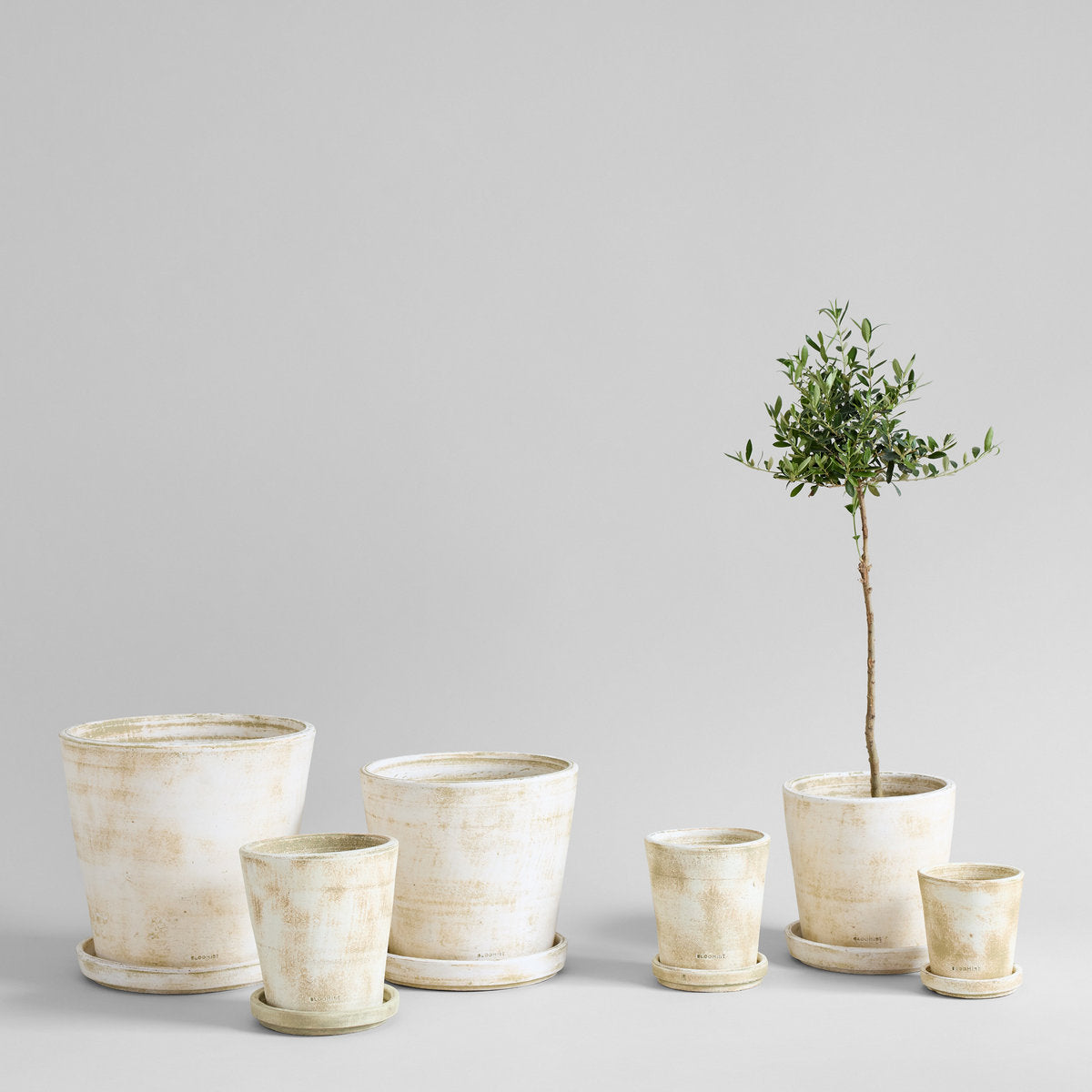
Compact Pots (4-6 inches diameter): Perfect for herbs, small succulents, and annual flowers. Easy to move and ideal for beginners.
Mid-Size Pots (8-12 inches diameter): Accommodate most perennials, larger herbs, and compact vegetables like cherry tomatoes or peppers. Our White Patina Basic Planter and Grey Patina Basic Planter in this size range showcase how traditional terracotta clay develops character over time—the natural patina finish deepens with each watering, creating subtle variations unique to your care.
Oversized Planters (13+ inches diameter): Necessary for trees, large perennials, and productive vegetables. Consider weight when choosing placement—filled large pots can weigh 50+ pounds. These sizes demonstrate how skilled artisans shape each piece by hand, with finishes that offer beautiful contrast that complements both indoor greenery and outdoor gardens.
Professional Tip: Always choose pots with drainage holes. While terracotta is porous, drainage holes remain essential for root health. Each of our terracotta planters features proper drainage, shaped during the throwing process to ensure your plants thrive for seasons to come.

Groupings: Arrange pots in odd numbers (3, 5, 7) and varying heights for visual interest. Mix planted containers with empty vessels for sculptural impact.
Plant Combination: Pair upright plants with trailing varieties for dynamic compositions. Combine different textures—the spiky leaves of sansevieria with the soft mounds of herbs, or the architectural forms of succulents with flowing grasses.
Embracing Patina: New terracotta has uniform coloring, but exposure to weather and mineral deposits creates beautiful variations over time. For guidance on maintaining your clay vessels while preserving their natural character, see our complete terracotta cleaning guide.
Spring: Start with cool-season crops and early herbs. Plant summer annuals after last frost.
Summer: Peak season for heat-loving herbs, vegetables, and flowering plants. Monitor watering needs closely.
Fall: Transition to cool-season vegetables and autumn-blooming perennials. Begin winter protection preparations.
Winter: Focus on hardy plants and indoor growing. Plan next year's displays and order seeds.

Mediterranean herbs (rosemary, thyme, lavender), succulents (echeveria, jade plants), drought-tolerant flowers (geraniums, marigolds), and vegetables like tomatoes and peppers all thrive in terracotta's well-draining environment.
Snake plants, ZZ plants, fiddle leaf figs, and rubber plants flourish indoors in clay vessels. These plants tolerate the drying cycles terracotta creates while benefiting from improved root aeration.
Plants that need excellent drainage and root aeration typically perform better in terracotta than plastic containers. The clay's porosity prevents waterlogged conditions while allowing oxygen to reach roots—essential for healthy growth.
Start with herbs like basil, rosemary, and thyme, or easy succulents like jade plants and sedum. These plants tolerate watering mistakes while providing quick success and useful harvests.
Check soil moisture every 2-3 days in warm weather. Water when the top inch feels dry for most plants, or when completely dry for succulents. Clay's porosity means more frequent watering than plastic containers require.
Yes, many vegetables excel in terracotta. Cherry tomatoes, peppers, lettuce, and herbs perform particularly well. Use pots at least 18 inches wide for fruiting vegetables and maintain consistent watering for best yields.
This mineral buildup from water and fertilizer is natural and harmless—it's part of terracotta's living patina that develops over time. If you prefer to remove it, our terracotta cleaning guide offers gentle methods that preserve the clay's integrity.




Your Shopping Cart is Empty
Browse our latest collection or check your saved favorites to add more items to your cart.



Manage your profile, track your orders, and enjoy a seamless shopping journey with us.
